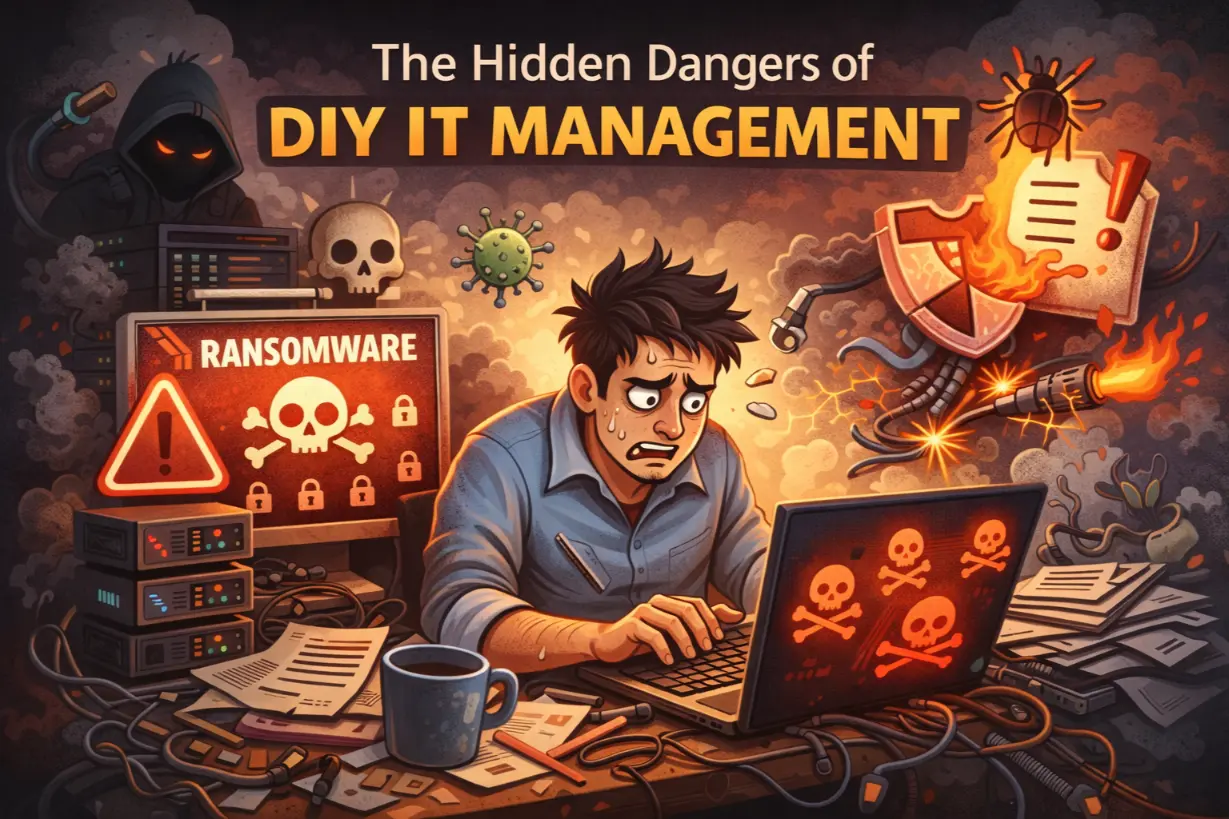
DIY IT Works… Until It Doesn’t
Many businesses start the same way.
A tech-savvy employee. A helpful friend. A consultant “on call.” A collection of cloud tools. Some best-effort security. Occasional troubleshooting.
At first, DIY IT management feels efficient and inexpensive.
Until:
- Systems fail
- Security incidents occur
- Downtime grows
- Compliance questions arise
- Growth stalls
DIY IT doesn’t usually fail loudly — it fails quietly, accumulating risk until something breaks in a very visible way.
This article exposes the hidden dangers of DIY IT management, why they’re often overlooked, and when it’s time to move beyond patchwork solutions.
What DIY IT Management Really Looks Like
DIY IT typically includes:
- No centralized monitoring
- Infrequent updates
- Inconsistent security
- Ad-hoc support
- Minimal documentation
It relies heavily on tribal knowledge and good intentions.
Why Businesses Choose DIY IT
Common reasons include:
- Cost concerns
- Small team size
- “It’s working fine” mentality
- Past negative MSP experiences
- Overconfidence in basic tools
DIY IT often begins as a temporary solution — then becomes permanent by accident.
Hidden Danger #1: Silent Security Gaps
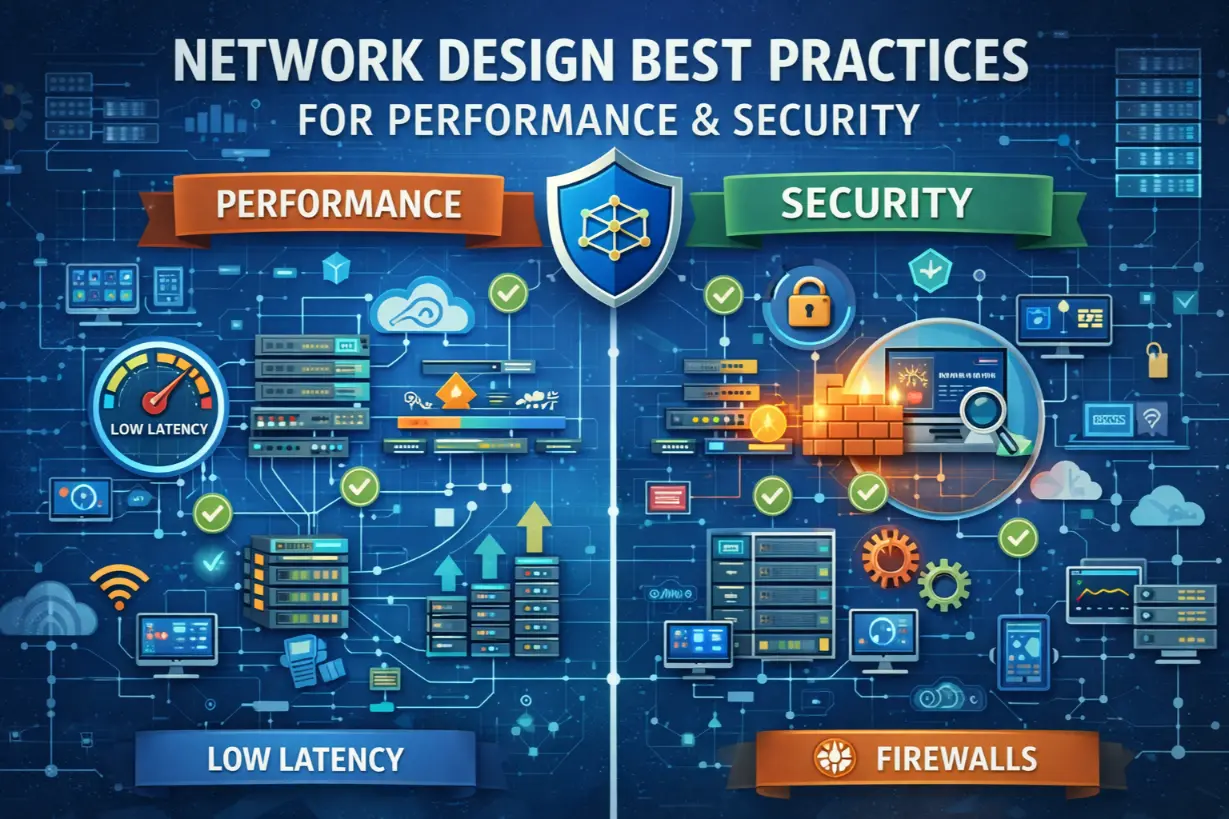
DIY environments rarely have:
- Continuous monitoring
- Centralized security controls
- Incident response capabilities
Threats linger undetected.
Attackers exploit:
- Unpatched systems
- Weak passwords
- Misconfigured cloud services
Breaches don’t announce themselves.
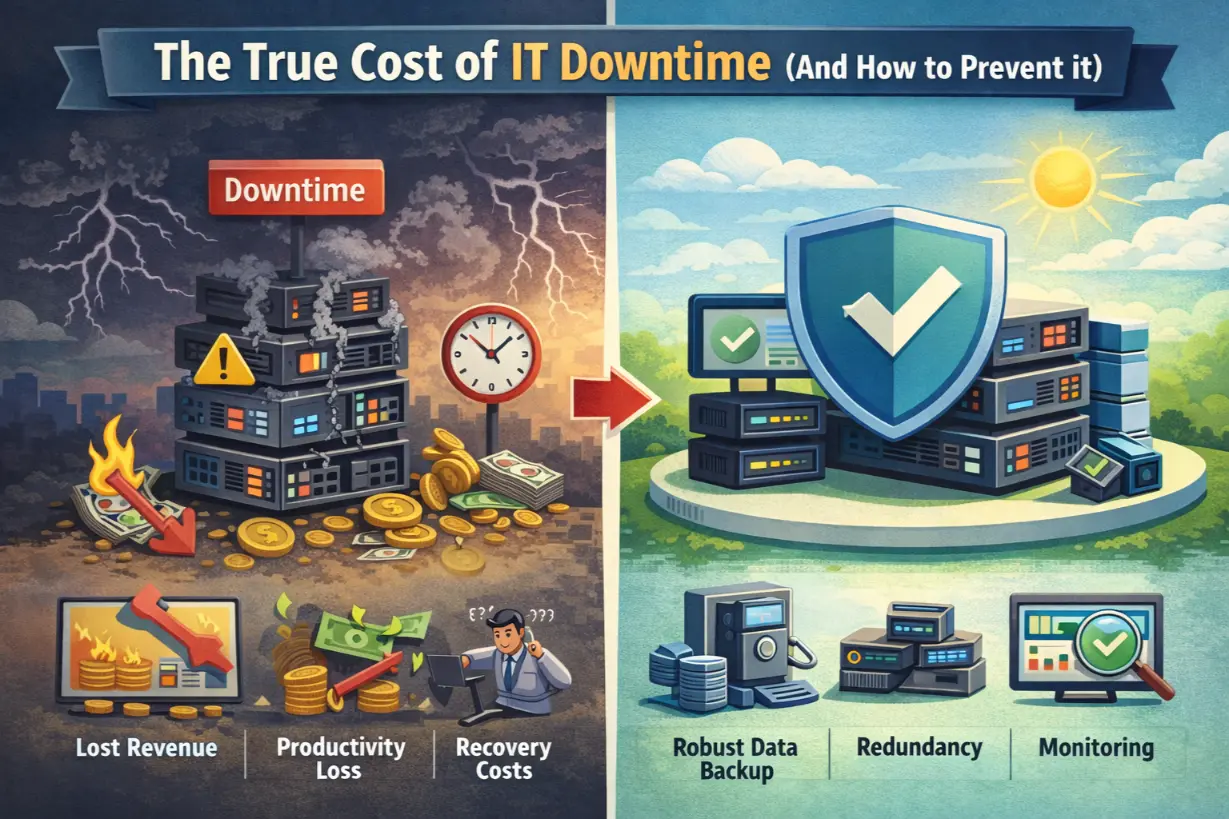
Hidden Danger #2: Downtime Is Inevitable — and Longer
Without proactive monitoring:
- Failures are discovered late
- Root causes are unclear
- Recovery is manual
Downtime lasts longer and costs more.
Hidden Danger #3: No Backup Isn’t the Same as No Recovery
DIY backups are often:
- Infrequent
- Untested
- Stored onsite
- File-only
When disaster hits, recovery fails.
Hidden Danger #4: Key-Person Risk
DIY IT concentrates knowledge in:
- One employee
- One contractor
- One vendor
If they leave, get sick, or disappear — so does your IT knowledge.
Hidden Danger #5: Compliance Blind Spots
DIY IT rarely meets:
- HIPAA
- PCI-DSS
- SOC 2
- Cyber insurance requirements
Compliance failures often surface during audits or after incidents.
Hidden Danger #6: Growth Breaks DIY IT
As businesses grow:
- Complexity increases
- Tool sprawl expands
- Risk compounds
DIY systems don’t scale gracefully.
Hidden Danger #7: Productivity Suffers Quietly
Employees lose time to:
- Slow systems
- Workarounds
- Repeated issues
Lost productivity rarely shows up on financial statements — but it adds up fast.
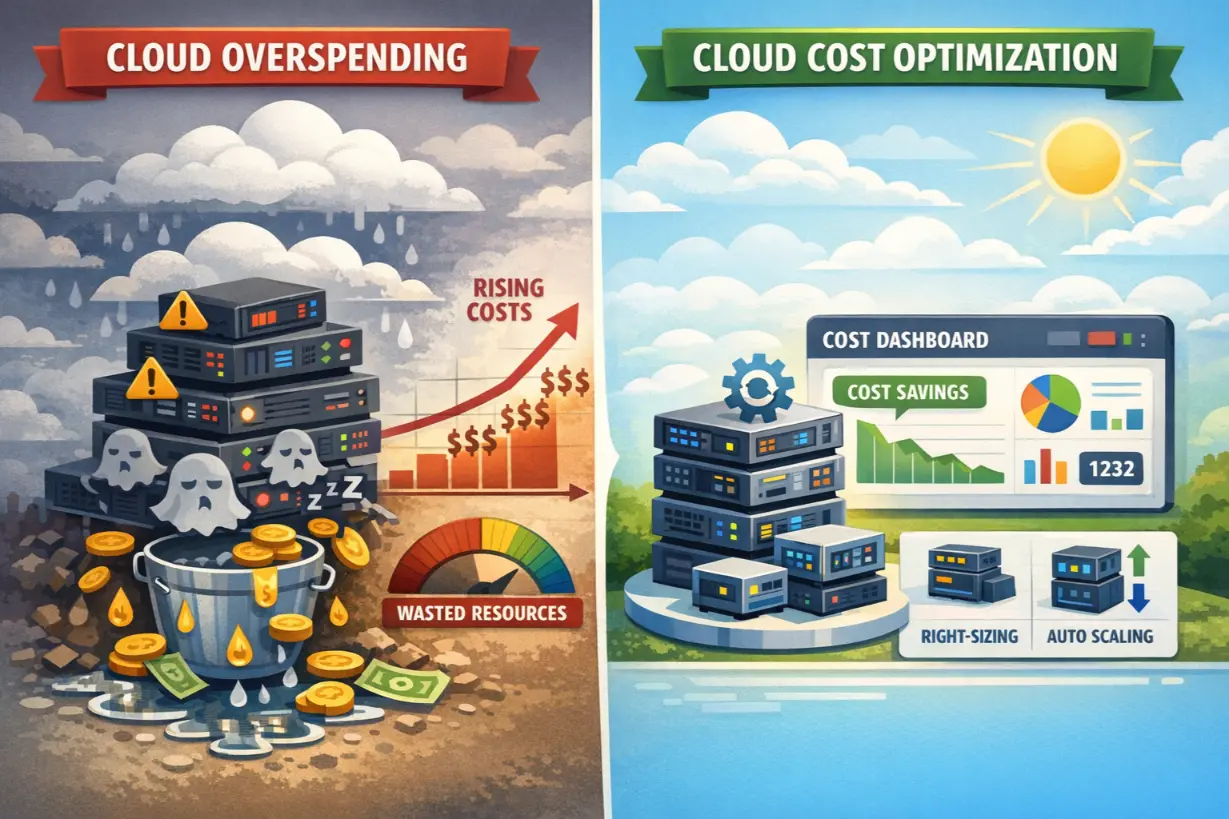
Why DIY IT Feels Cheaper (But Isn’t)
DIY IT avoids:
- Monthly fees
- Contracts
- Formal processes
But it creates:
- Emergency costs
- Downtime losses
- Security incidents
- Inefficiencies
The bill arrives later — and larger.
DIY IT vs Managed IT: The Real Difference
| DIY IT | Managed IT |
| Reactive | Proactive |
| Fragmented | Standardized |
| Manual | Automated |
| Hidden risk | Controlled risk |
| Unpredictable cost | Predictable cost |
Managed IT replaces uncertainty with structure.
How Managed IT Eliminates DIY Risks
Managed IT provides:
- 24/7 monitoring
- Proactive maintenance
- Layered security
- Tested backups
- Documentation
- Accountability
IT becomes resilient — not fragile.
When DIY IT Is No Longer Viable
DIY IT is a liability when:
- Downtime impacts revenue
- Security is a concern
- Compliance matters
- Growth accelerates
- Leadership needs predictability
At this stage, DIY IT becomes dangerous.
Common DIY IT Red Flags
- No monitoring dashboards
- No security reporting
- No recovery testing
- No documentation
- “We’ll fix it when it breaks” mindset
These are warning signs — not badges of efficiency.
Why Managed IT Is About Risk Transfer
When you hire an MSP, you’re not just buying support.
You’re transferring:
- Responsibility
- Expertise
- Accountability
Risk becomes shared — and managed.
Transitioning From DIY IT to Managed IT
A good MSP:
- Assesses current risks
- Documents systems
- Stabilizes operations
- Improves security
- Aligns IT with business goals
The transition is structured — not disruptive.
DIY IT Is a Phase, Not a Strategy
DIY IT may work early on.
But as businesses mature, the risks outweigh the savings.
Technology is no longer a side function — it’s core infrastructure. Managing it casually invites failure.
Managed IT doesn’t remove control — it adds reliability, visibility, and confidence.
When IT stops being a guessing game, businesses move faster — and safer.
Still managing IT in-house or ad hoc?
A DIY IT risk assessment can identify vulnerabilities before they turn into costly incidents.