The Problem With “Call Us When It Breaks”
For decades, businesses relied on a simple IT model:
“If something breaks, call IT.”
This break-fix approach feels cost-effective on the surface. You only pay when something goes wrong. No monthly fees. No contracts. No commitment.
Until it breaks.
Then systems go down. Productivity stops. Customers are impacted. Emergency bills pile up. And leadership wonders why IT problems always seem to come at the worst possible time.
Proactive IT support exists because break-fix no longer works in a business-critical, always-connected world.
What Is Break-Fix IT?
Break-fix IT is a reactive support model where IT action occurs only after a problem happens.
Characteristics include:
- No continuous monitoring
- No preventative maintenance
- No strategic planning
- Pay-per-incident pricing
It treats IT like a utility — not a business asset.
What Is Proactive IT Support?
Proactive IT support focuses on preventing problems before users experience them.
It includes:
- 24/7 system monitoring
- Regular maintenance and patching
- Performance optimization
- Security threat prevention
- Capacity planning
Proactive IT assumes systems will fail — and prepares for it.
The Hidden Costs of Break-Fix IT
Break-fix appears cheaper, but it hides significant costs.
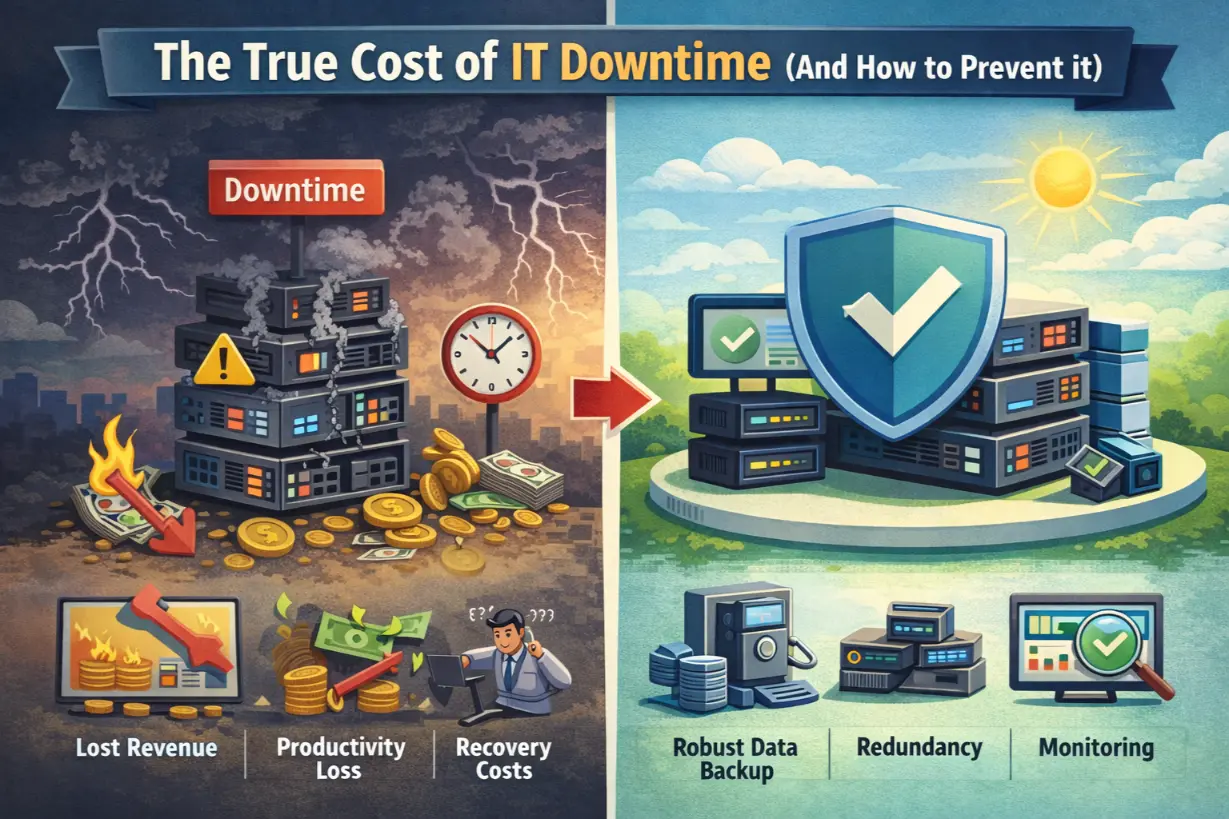
1. Downtime Costs More Than Repairs
Break-fix waits for failure.
By the time IT is engaged:
- Revenue is already lost
- Employees are idle
- Customers are frustrated
The repair cost is often the smallest expense.
2. Problems Compound Over Time
Without maintenance:
- Hardware degrades
- Software falls behind
- Security gaps widen
Each “small” issue increases the chance of a major outage.
3. Security Is an Afterthought
Break-fix IT typically reacts to:
- Malware infections
- Ransomware
- Account compromises
By then, damage is already done.
4. No Accountability or Strategy
Break-fix providers fix issues — they don’t:
- Plan infrastructure
- Align IT with business goals
- Improve long-term reliability
There’s no roadmap — just reaction.
Why Proactive IT Support Wins
1. Problems Are Fixed Before Users Notice
With proactive monitoring:
- Disk failures are detected early
- Memory issues are resolved quietly
- Network congestion is corrected
Most issues never become “incidents.”
2. Predictable IT Costs
Proactive IT typically uses:
- Flat monthly pricing
- Defined service scopes
- Clear expectations
This allows businesses to budget accurately.
3. Stronger Security Posture
Proactive IT includes:
- Patch management
- Vulnerability scanning
- Threat detection
- Endpoint protection
Security becomes continuous — not reactive.
4. Higher Productivity
When systems are stable:
- Employees stay focused
- Workflows remain uninterrupted
- IT becomes invisible
Reliability fuels productivity.
Proactive IT Is a Mindset Shift
Break-fix asks:
“What broke?”
Proactive IT asks:
“What could break — and how do we prevent it?”
This mindset changes everything:
- Infrastructure design
- Vendor selection
- Update schedules
- Risk management
How Managed IT Enables Proactive Support

Managed IT services are built on proactive principles.
They provide:
- 24/7 monitoring tools
- Automated alerts
- Standardized maintenance processes
- Dedicated support teams
- Documentation and reporting
This infrastructure makes prevention scalable.
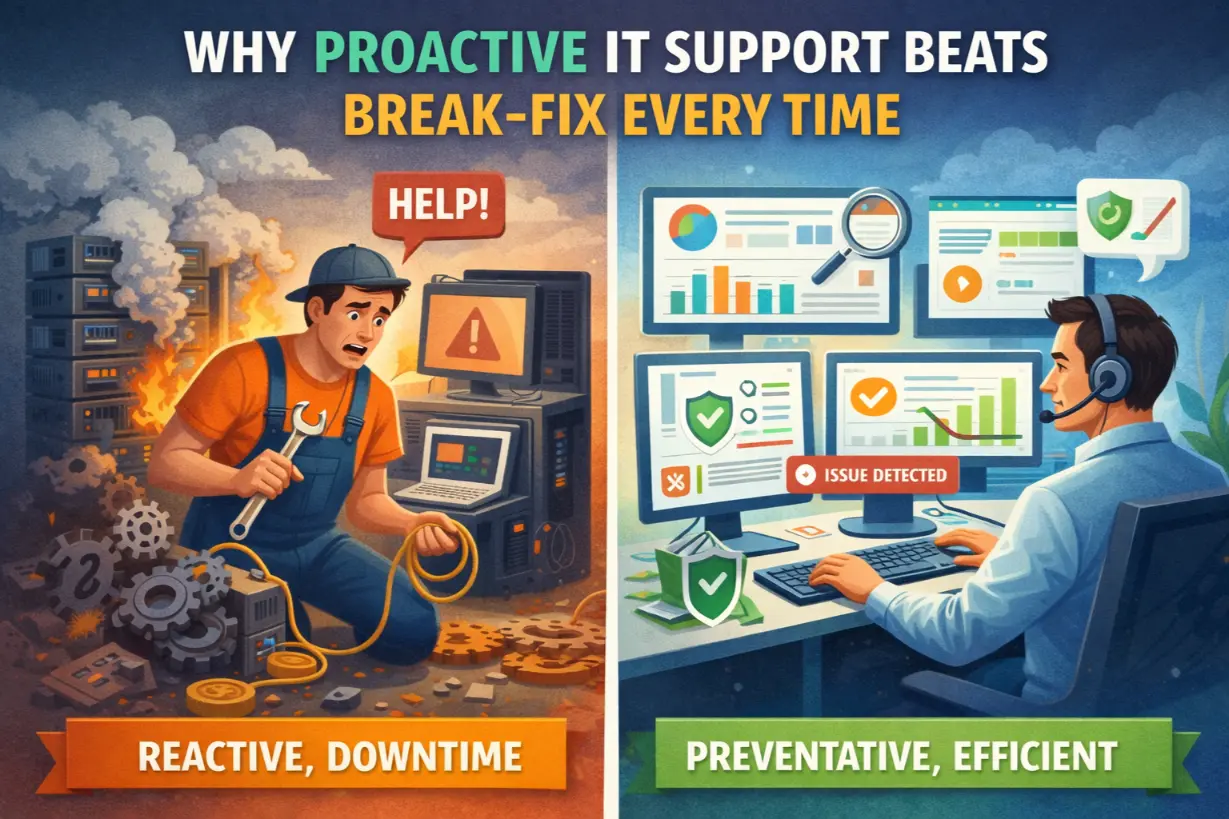
Real-World Example: Break-Fix vs Proactive
Break-Fix Scenario
- Server fails unexpectedly
- Downtime lasts hours
- Emergency repair costs spike
- Data recovery is uncertain
Proactive IT Scenario
- Hardware failure predicted
- Replacement scheduled
- No downtime
- No emergency costs
Same system. Very different outcome.
Why Businesses Resist Proactive IT (At First)
Common objections include:
- “Nothing is broken right now”
- “We’ve always done it this way”
- “Monthly fees seem expensive”
Ironically, these beliefs exist because proactive IT is absent.
When Break-Fix Still Makes Sense (Rarely)
Break-fix may work for:
- Very small, non-critical environments
- Temporary setups
- Non-production systems
For operational businesses, it’s a liability.
Proactive IT Aligns With Business Growth
As companies grow:
- Systems become more complex
- Risk exposure increases
- Downtime impact multiplies
Proactive IT scales stability alongside growth.
Key Signs You’ve Outgrown Break-Fix IT
- Frequent outages
- Recurring “mystery issues”
- Aging infrastructure
- Security concerns
- IT fires dominate meetings
These aren’t normal — they’re warnings.
Prevention Always Beats Reaction
Break-fix IT waits for failure.
Proactive IT expects it — and plans around it.
In today’s business environment, reliability is competitive advantage. Proactive IT support delivers that advantage quietly, consistently, and predictably.
If your IT only shows up when things are broken, the real question is:
How much damage has already been done?
Want fewer IT emergencies and more stability?
A proactive IT assessment can uncover risks before they turn into outages