Managed IT Is No Longer Just “Support”
Managed IT services started as:
- Helpdesk support
- Server maintenance
- Break-fix alternatives
But the role of managed IT has expanded dramatically.
Today, MSPs influence:
- Security posture
- Business continuity
- Digital transformation
- Cost control
- Strategic planning
The future of managed IT is not about fixing problems — it’s about anticipating them, preventing them, and guiding businesses through constant technological change.
This article explores where managed IT is headed, the trends shaping the industry, and what businesses should expect — and demand — from their IT partners moving forward.
Why The Future of Managed IT Is Evolving So Quickly
Several forces are reshaping the MSP landscape:
- Cyber threats are accelerating
- Technology stacks are expanding
- Talent shortages persist
- Businesses demand predictability
- IT is now business-critical
Traditional support models can’t keep up.
Trend #1: AI-Driven Managed IT Operations
The Future of Managed IT: Key Considerations
AI will become foundational — not optional.
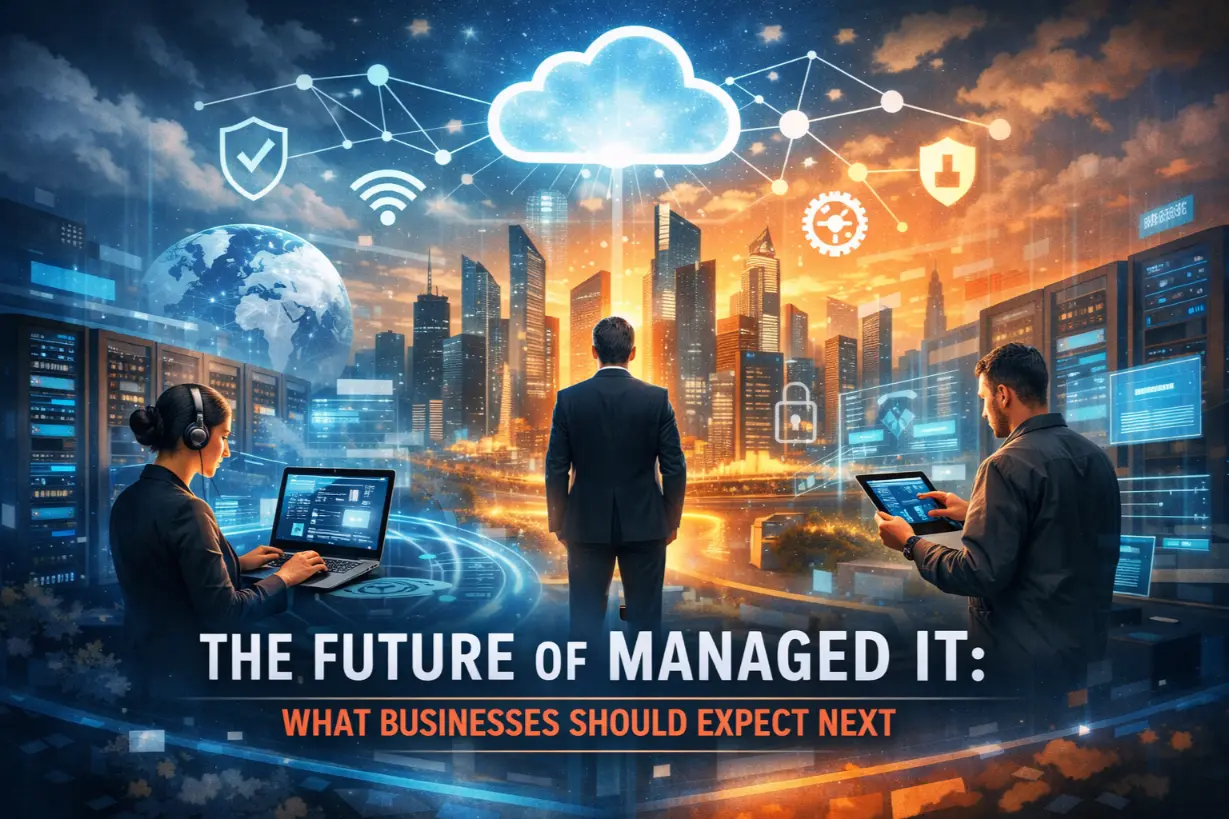
Managed IT services started as a reactive approach to technology issues. But the role of managed IT has expanded dramatically. Today, MSPs influence strategic decisions and operational efficiency. The future of managed IT is about anticipating challenges, preventing disruptions, and guiding businesses through continuous technological evolution. This article examines the trajectory of managed IT, the trends redefining the industry, and what businesses should expect and demand from their IT partners in the coming years. The future of managed IT is evolving rapidly due to various factors, most notably the inadequacy of traditional support models. One significant trend is the rise of AI-driven managed IT operations, making artificial intelligence a foundational element of service delivery.
Future MSPs will rely on AI to:
- Predict failures before they happen
- Detect security anomalies instantly
- Automate remediation
- Reduce response times to seconds
AI shifts IT from reactive to predictive.
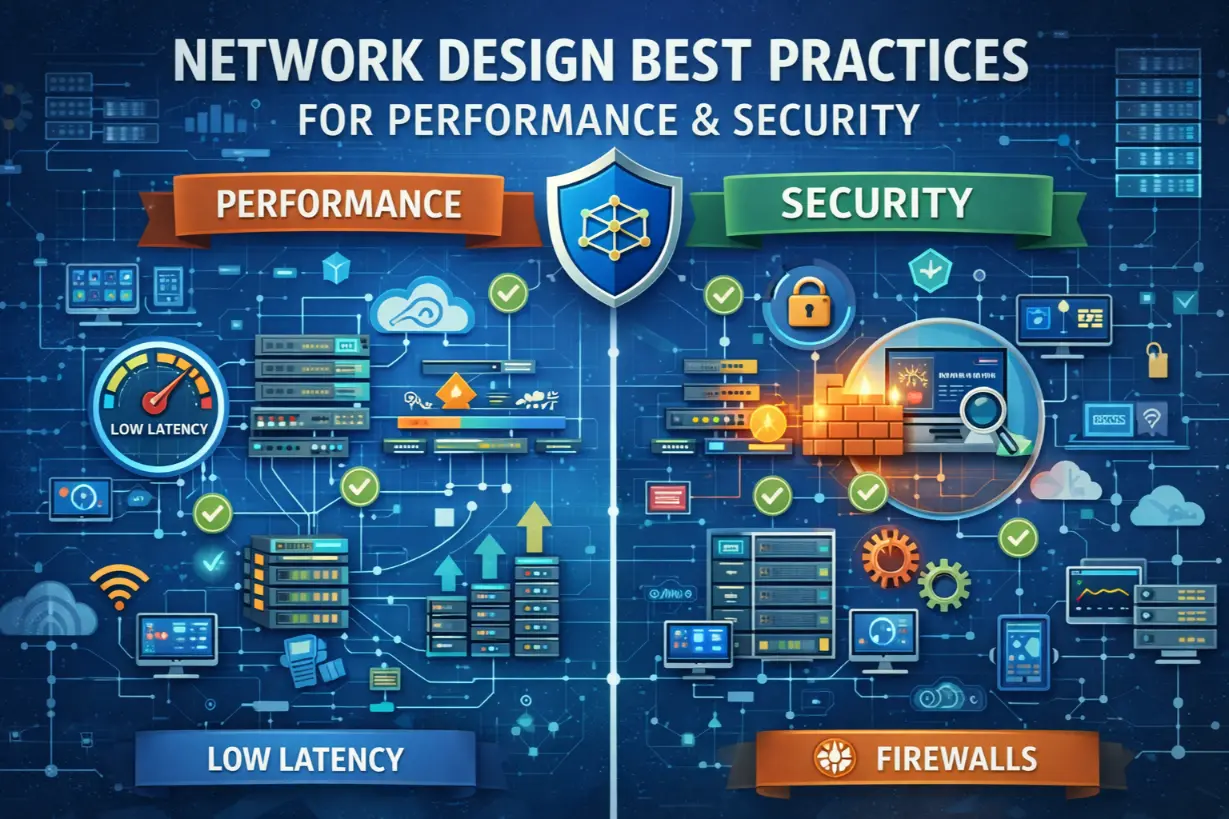
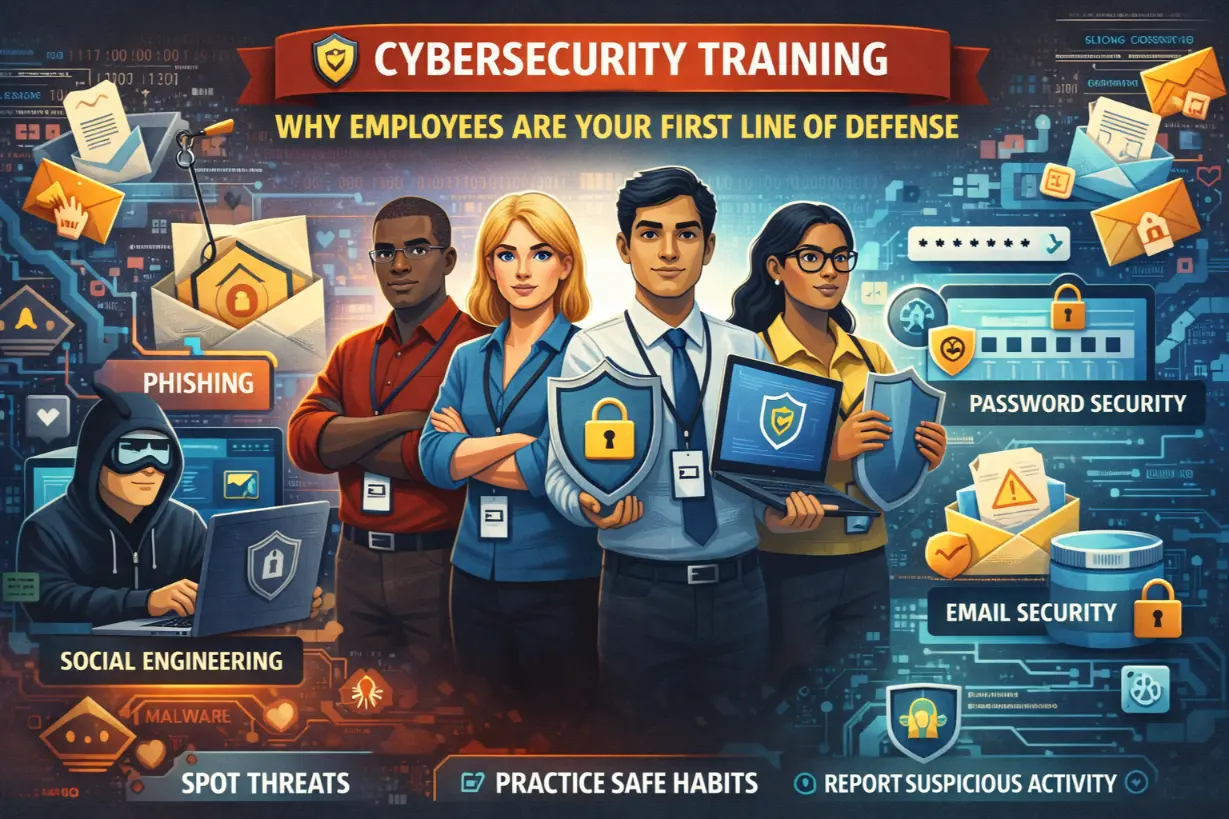
Trend #2: Security-First Managed IT Becomes the Standard
Security will no longer be an add-on.
Expect:
- Zero Trust by default
- Continuous security monitoring
- Integrated threat response
- Cyber insurance alignment
MSPs that don’t lead with security will disappear.
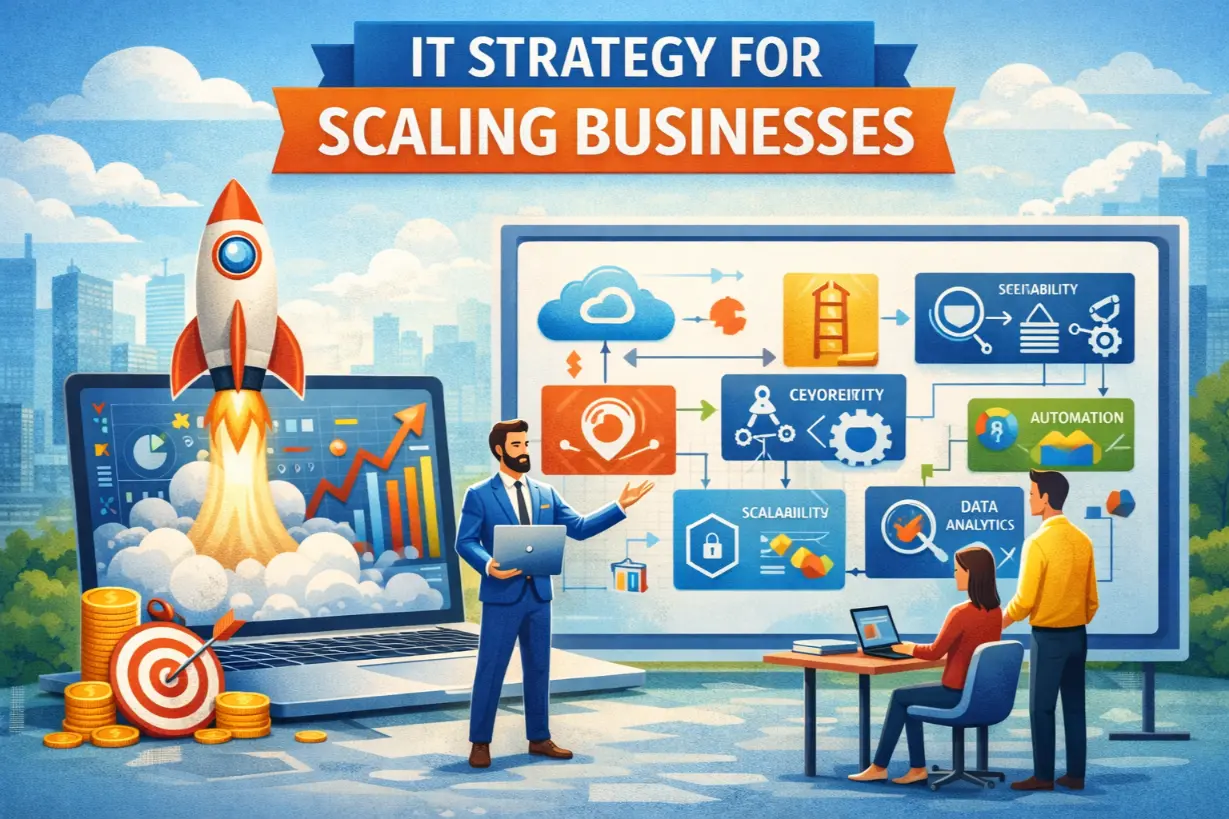
Trend #3: Managed IT as a Strategic Advisory Role
Future MSPs won’t just manage systems — they’ll advise leadership.
This includes:
- IT roadmapping
- Risk management
- Budget forecasting
- Technology alignment with business goals
MSPs become virtual CIOs for many organizations.
Trend #4: Outcome-Based IT Services
Businesses won’t pay for:
- Tickets
- Hours
- Tools
They’ll pay for:
- Uptime
- Security
- Performance
- Predictability
Success will be measured by outcomes, not activity.
Trend #5: Hyper-Automation & Self-Healing IT
Automation will go beyond scripts.
Expect:
- Self-healing systems
- Automated compliance enforcement
- Real-time remediation
- Minimal human intervention
Human IT professionals will focus on strategy — not maintenance.
Trend #6: Co-Managed IT Becomes the Dominant Model
Full outsourcing won’t fit most growing organizations.
Co-managed IT will dominate because it:
- Preserves internal knowledge
- Adds scalable expertise
- Reduces burnout
- Improves agility
Collaboration replaces replacement.
Trend #7: Managed IT and Compliance Convergence
Compliance demands will increase.
MSPs will handle:
- Continuous compliance monitoring
- Audit readiness
- Policy enforcement
- Evidence reporting
Compliance becomes operational — not episodic.
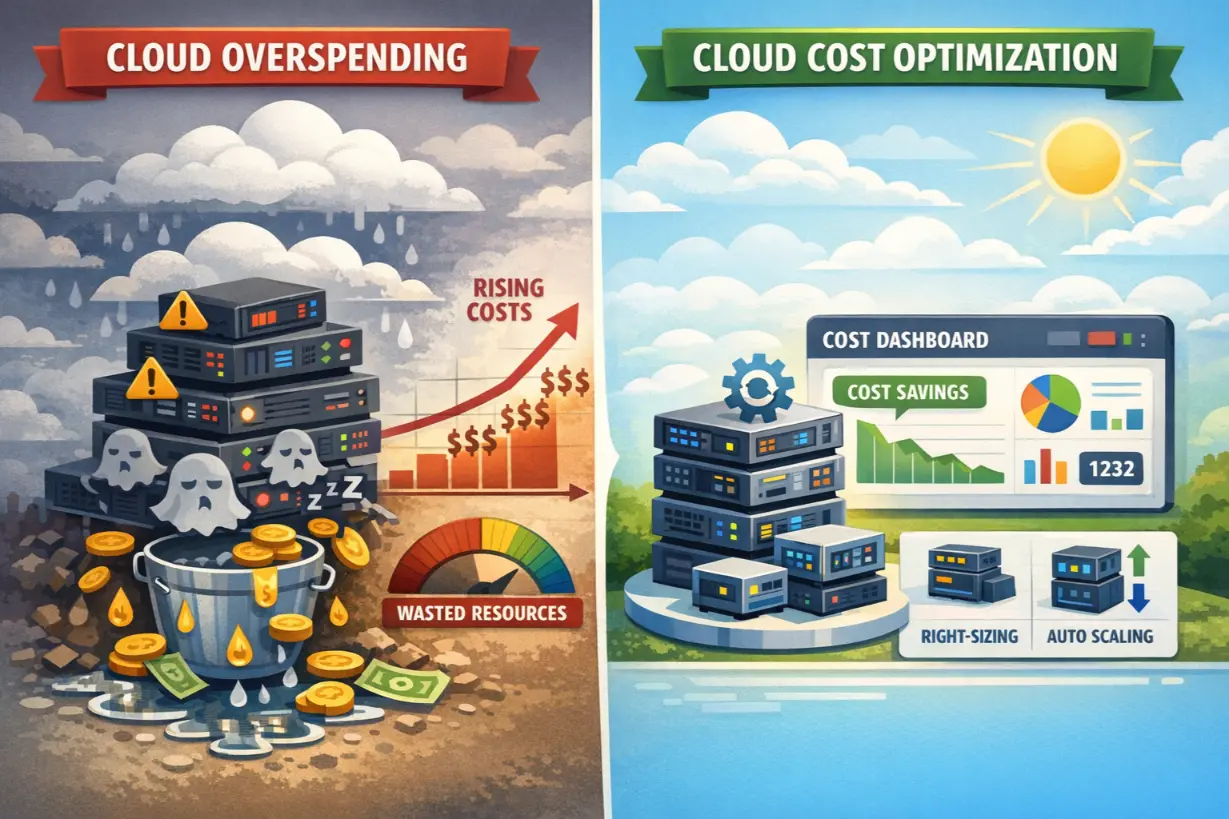
Trend #8: Cloud Governance Replaces Cloud Adoption
Cloud adoption is already here.
The future focus is:
- Cost governance
- Security governance
- Performance optimization
Managed IT will control cloud chaos.
Trend #9: Employee Experience as an IT Metric
Future IT success will be measured by:
- Employee productivity
- Onboarding speed
- System usability
IT will be judged by how well people can work.
Trend #10: MSP Transparency & Accountability
Businesses will demand:
- Clear reporting
- Measurable metrics
- Real visibility
Black-box IT providers won’t survive.
What Businesses Must Expect From Managed IT Going Forward
Businesses should expect MSPs to:
- Prevent issues — not just respond
- Lead with security
- Provide strategic guidance
- Deliver predictable outcomes
- Continuously improve
Anything less is outdated.
How Businesses Should Prepare for the Future of Managed IT
Leaders should:
- Reevaluate current IT partnerships
- Demand proactive planning
- Align IT with business strategy
- Invest in resilience and security
The future rewards preparation.
The MSPs That Will Thrive (And Those That Won’t)
Thriving MSPs:
- Embrace automation and AI
- Invest in security expertise
- Act as advisors
- Deliver measurable value
Failing MSPs:
- Sell hours
- React instead of predict
- Avoid accountability
- Resist change
The market will decide quickly.
Managed IT as a Competitive Advantage
In the future:
- Technology maturity differentiates businesses
- Security posture influences trust
- Uptime impacts reputation
Managed IT becomes a growth multiplier.
The End of “Set It and Forget It” IT
Technology changes constantly.
Managed IT relationships must be:
- Adaptive
- Collaborative
- Strategic
Static IT strategies will fail.
Managed IT Is Becoming Mission-Critical
The future of managed IT is not optional, peripheral, or tactical.
It is:
- Strategic
- Predictive
- Security-driven
- Business-aligned
Businesses that partner with forward-thinking MSPs will:
- Experience less disruption
- Recover faster
- Scale more confidently
- Compete more effectively
Managed IT is no longer about keeping the lights on.
It’s about guiding the business forward in a world where technology never stands still.
Is your current IT provider ready for what’s next — or stuck in the past?
A future-readiness IT assessment can determine whether your technology strategy is built for what’s coming, not what’s already behind you.