Hardware Procurement & Lifecycle Management: Ensuring Your Business Has Reliable, Secure, and High-Performing Technology
Every organization depends on reliable hardware to support daily operations—from workstations and laptops to servers, network equipment, and mobile devices. But selecting the right technology, managing upgrades, tracking warranties, and planning replacements can be challenging without a clear strategy. Hardware Procurement & Lifecycle Management ensures your business always has the best tools for the job while minimizing downtime, controlling costs, and maintaining strong security.
The procurement process begins with evaluating your organization’s needs. Not all hardware is built the same, and mismatched equipment can lead to slow performance, employee frustration, and unnecessary expenses. A strategic procurement approach involves assessing workloads, performance requirements, security needs, and long-term business goals. Whether you’re outfitting new employees, upgrading outdated systems, or expanding your infrastructure, selecting the right hardware from the start ensures smoother operations and better productivity.
Cost efficiency is another key benefit of structured hardware procurement. Businesses often overspend when purchasing one device at a time or choosing consumer-grade equipment that must be replaced frequently. Procurement experts leverage vendor partnerships, bulk pricing, and standardized configurations to reduce costs while ensuring quality. They also help avoid purchasing unnecessary or incompatible hardware—reducing waste and maximizing your technology budget.
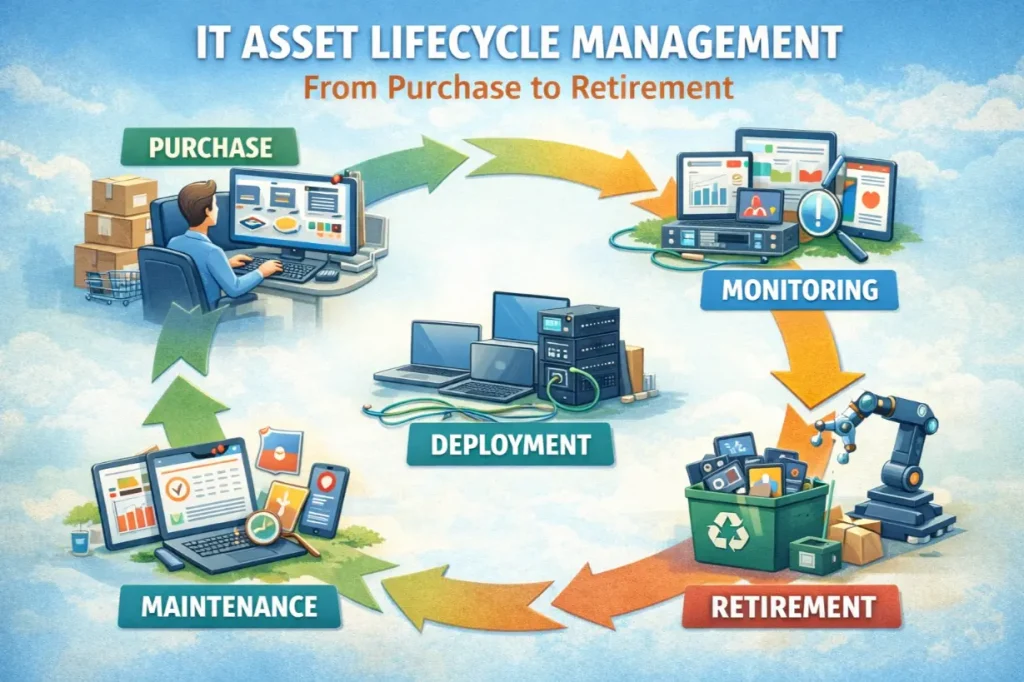
Once hardware is deployed, lifecycle management becomes essential. Every device has a limited operational lifespan. Over time, performance declines, security risks increase, and support needs rise. Effective lifecycle management provides a proactive plan for maintaining, upgrading, and retiring systems before they become liabilities. This includes scheduled refresh cycles, monitoring performance, applying firmware updates, tracking warranties, and planning for end-of-life replacements. A well-managed lifecycle improves reliability, reduces downtime, and ensures your team always has the tools they need to perform at their best.
Security plays a major role in hardware management. Outdated devices often lack support for modern security controls, making them vulnerable to cyberattacks. Lifecycle management ensures that your hardware remains compatible with current security standards—from encryption and authentication tools to operating system updates and antivirus solutions. Secure device retirement is equally important. Proper data wiping and disposal procedures protect sensitive information and maintain compliance with privacy regulations.
Standardization is another valuable component of hardware lifecycle management. When all employees use consistent, approved configurations, IT support becomes faster and more effective. Troubleshooting is simplified, spare parts can be stocked efficiently, and new employees can onboard quickly with standardized setups. This uniformity enhances stability and reduces long-term support costs.
Asset tracking ensures your organization always knows what hardware you have, where it’s located, and who is responsible for it. This improves accountability, simplifies audits, and helps prevent loss or theft. Asset management tools also automate warranty tracking and expiration alerts, ensuring timely repairs or replacements and reducing unexpected downtime.
Finally, lifecycle management prepares your business for growth. As your organization expands, your hardware needs evolve. Proactive planning ensures you can scale smoothly without sudden, expensive upgrades. With clear forecasting, predictable refresh cycles, and strategic procurement, your business stays equipped with modern, high-performing technology that aligns with current and future goals.
Hardware Procurement & Lifecycle Management provides your organization with the structure, strategy, and expertise needed to maintain a reliable, secure, and cost-effective technology foundation.

 precise_webmaster