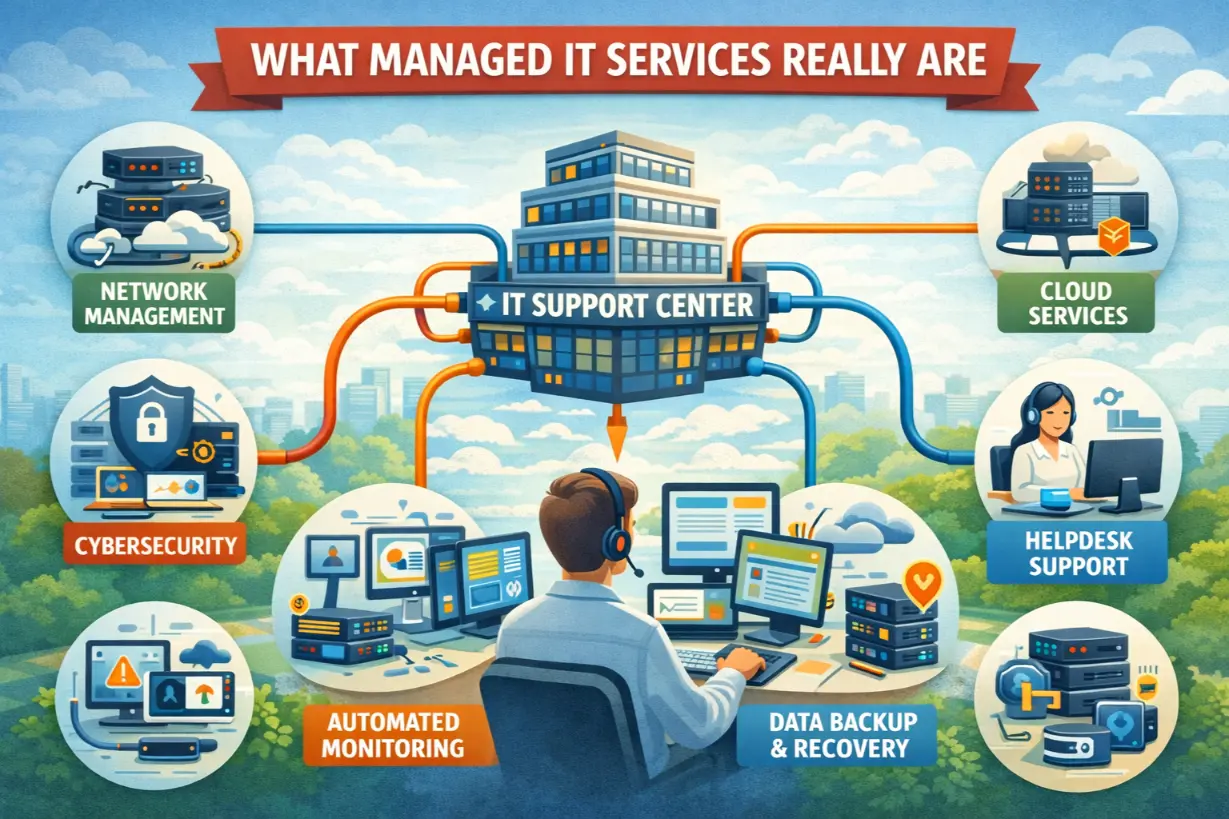
Why “Managed IT” Is Still Misunderstood
Most businesses think they understand IT support—until something breaks.
A server crashes. Email goes down. A cyberattack locks files. Productivity halts. Revenue bleeds. And suddenly, IT becomes the most important part of the business.
This is where managed IT services enter the conversation—but they’re often misunderstood.
Many assume managed IT is just “outsourced helpdesk.” Others think it’s only for large enterprises. In reality, managed IT services are a strategic operating model that allows businesses to stay secure, scalable, and competitive without drowning in technical complexity.
In this guide, we’ll break down what managed IT services really are, how they work behind the scenes, and why businesses increasingly rely on them instead of reactive, break-fix support.
What Are Managed IT Services? Understanding what are managed it services is essential for businesses today, and knowing what are managed it services helps to clarify the role and importance of modern IT solutions.
At its core, managed IT services mean outsourcing the management, monitoring, and maintenance of your technology systems to a specialized provider—commonly known as a Managed Service Provider (MSP). This highlights why understanding what are managed it services is crucial for effective business operations.
Instead of calling IT after something breaks, managed IT focuses on:
- Preventing problems before they happen
- Monitoring systems 24/7
- Securing networks and endpoints
- Maintaining predictable IT costs
- Aligning technology with business goals
Managed IT shifts IT from a reactive expense into a proactive business function.
Managed IT vs Traditional IT Support
Break-Fix IT (Old Model)
- You pay only when something breaks
- No monitoring or prevention
- Downtime is inevitable
- Security gaps go unnoticed
- Costs are unpredictable
Managed IT Services (Modern Model)
- Flat, predictable monthly pricing
- Continuous monitoring and maintenance
- Issues resolved before users notice
- Security baked into daily operations
- IT aligned with business strategy
Break-fix waits for failure.
Managed IT designs systems to avoid failure.
What Services Are Included in Managed IT?
While offerings vary, most high-quality MSPs provide:
1. 24/7 Monitoring & Alerting
Servers, networks, endpoints, and cloud systems are constantly monitored for performance, failures, and threats.
2. Proactive Maintenance
- Patch management
- Updates and firmware control
- Hardware health checks
- Performance optimization
3. Helpdesk & User Support
- Fast response times
- Remote and onsite support
- End-user troubleshooting
4. Cybersecurity Management
- Endpoint protection
- Firewall management
- Email security & phishing prevention
- Threat detection and response
5. Backup & Disaster Recovery
- Automated backups
- Offsite and cloud redundancy
- Business continuity planning
6. IT Strategy & Planning
- Technology roadmaps
- Budget forecasting
- Scalability planning
- Vendor management
Why Businesses Are Moving to Managed IT Services
1. Downtime Is Too Expensive
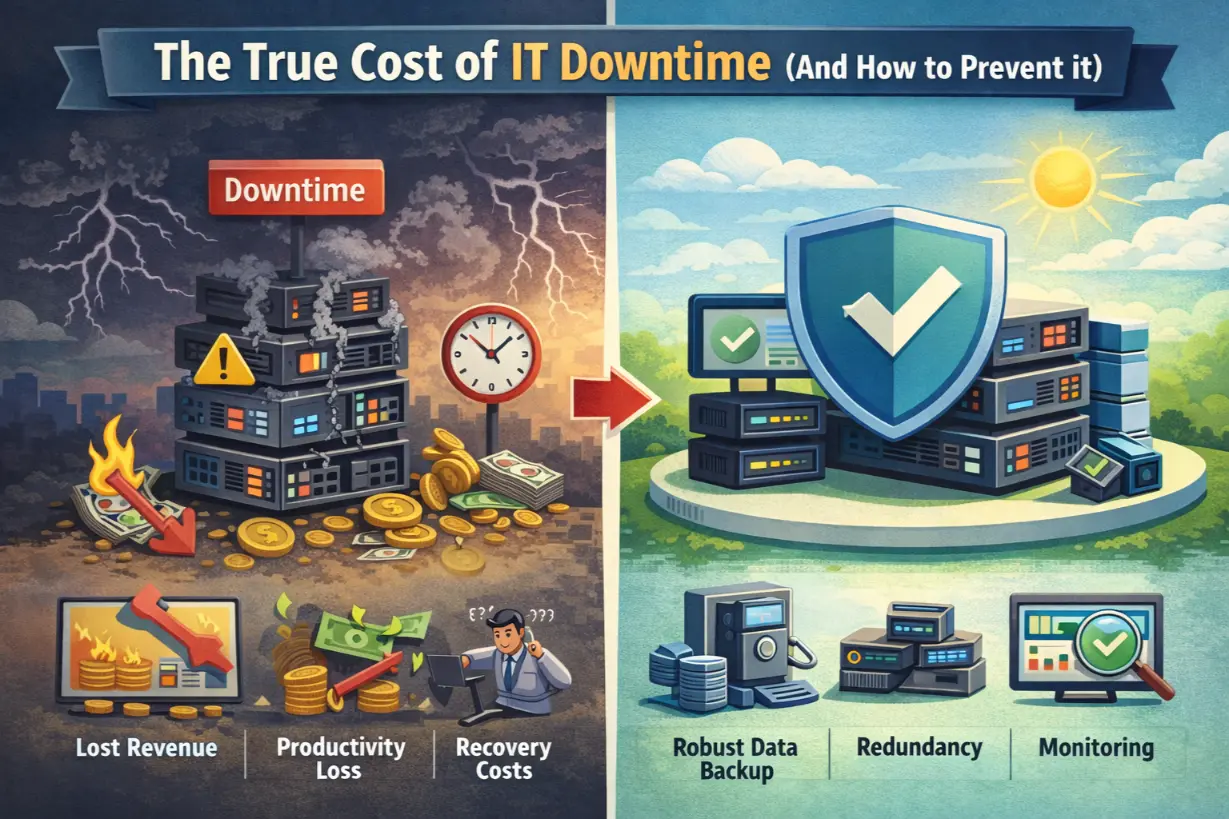
Even short outages cost thousands in lost productivity and revenue. Managed IT minimizes downtime through constant oversight.
2. Cyber Threats Are Relentless
Small and mid-sized businesses are now primary cyber targets. MSPs bring enterprise-grade security that internal teams can’t match alone.
3. IT Talent Is Hard to Hire
Managed IT gives access to entire teams of specialists—without recruiting, training, or turnover headaches.
4. Predictable IT Costs
Flat monthly pricing eliminates surprise repair bills and allows accurate budgeting.
5. Technology Is Business-Critical
IT is no longer “just support.” It drives operations, sales, customer experience, and growth.
Who Should Use Managed IT Services?
Managed IT is ideal for:
- Small to mid-sized businesses (10–500 employees)
- Growing companies without internal IT
- Organizations with small internal IT teams
- Regulated industries (healthcare, finance, legal)
- Companies embracing cloud and remote work
If technology downtime would stop your business—even for an hour—managed IT is not optional.
Common Myths About Managed IT Services
❌ “It’s too expensive”
In reality, managed IT often costs less than reactive IT when downtime, breaches, and inefficiencies are considered.
❌ “We’ll lose control”
You retain full ownership—MSPs manage, monitor, and advise.
❌ “It’s only for big companies”
SMBs benefit the most because they lack enterprise-level resources internally.

Managed IT as a Strategic Partner (Not Just Support)
The best MSPs don’t just fix problems—they:
- Advise leadership
- Align IT with growth goals
- Improve operational efficiency
- Reduce risk exposure
Managed IT becomes part of business leadership, not just infrastructure maintenance.
Why Managed IT Is the New Standard
Technology no longer supports the business—it is the business.
Managed IT services allow companies to:
- Stay secure
- Remain operational
- Scale confidently
- Compete effectively
Whether you’re tired of constant IT fires or planning for growth, managed IT services provide the structure, expertise, and reliability modern businesses need.
Curious how managed IT could improve your business?
Start with an IT assessment and uncover hidden risks, inefficiencies, and opportunities before they become problems.