Manual IT Can’t Keep Up Anymore
Modern IT environments are too complex to manage manually.
Between:
- Cloud platforms
- Remote workforces
- Security threats
- Compliance demands
- Continuous updates
Manual processes simply don’t scale.
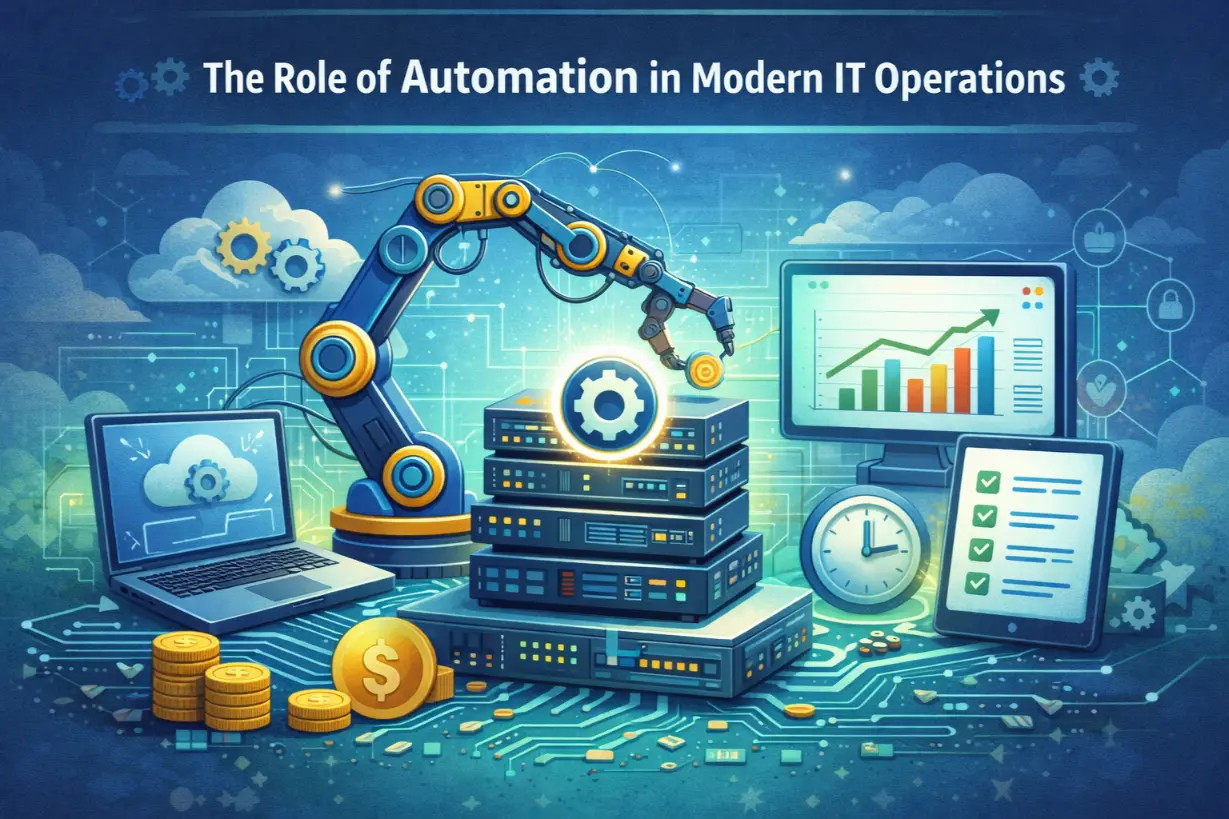
This is why automation has become the backbone of modern IT operations. It’s no longer about convenience — it’s about survival.
This article explores how automation reshapes IT operations, where it delivers the most value, and why managed IT services rely on it heavily.
What Is IT Automation?
IT automation uses software and workflows to perform repetitive tasks without human intervention.
This includes:
- Monitoring and alerting
- Patch management
- Provisioning
- Incident response
- Compliance reporting
Automation replaces inconsistency with precision.
Why Automation Matters in IT Operations
1. Scale Without Headcount
Automation allows IT teams to:
- Support more users
- Manage more systems
- Handle more incidents
Without adding staff.
2. Reduce Human Error
Manual processes introduce:
- Missed steps
- Configuration mistakes
- Delays
Automation executes tasks the same way every time.
3. Faster Response Times
Automated systems:
- Detect issues instantly
- Trigger corrective actions
- Reduce downtime
Speed matters when systems fail.
4. Improve Security Posture
Automation enforces:
- Patch compliance
- Access controls
- Policy adherence
Security gaps close faster.
Core Areas Where IT Automation Delivers Value
Monitoring & Alerting
Automated monitoring:
- Tracks performance
- Detects anomalies
- Triggers alerts
Problems are identified early.
Patch & Update Management
Automation ensures:
- Timely updates
- Consistent deployments
- Reduced vulnerabilities
No more missed patches.
Incident Response
Automated workflows:
- Isolate devices
- Restart services
- Escalate issues
Response becomes immediate.
Provisioning & Deprovisioning
Automation handles:
- User onboarding
- Access assignment
- Account removal
Security improves automatically.
Automation vs Orchestration
Automation performs tasks.
Orchestration coordinates multiple automated tasks into end-to-end workflows.
Modern IT uses both.
The MSP Advantage: Automation at Scale
Managed IT providers build automation into everything.
They leverage:
- RMM platforms
- Scripting
- AI-driven analytics
- Workflow engines
This enables proactive, consistent support.
Automation in Cybersecurity
Security automation includes:
- Threat detection
- Response playbooks
- Access revocation
- Log analysis
Attacks are contained faster.
Common Automation Mistakes
- Automating broken processes
- No change management
- Poor documentation
- Lack of oversight
Automation must be strategic.
Why Businesses Can’t DIY Automation Easily
Automation requires:
- Expertise
- Tool integration
- Maintenance
- Monitoring
MSPs already have this infrastructure.
Automation and the Human Element
Automation doesn’t replace IT professionals.
It:
- Frees them from repetitive work
- Enables strategic focus
- Improves job satisfaction
Humans still make decisions — machines execute.
The Business Impact of IT Automation
- Lower operational costs
- Higher uptime
- Better security
- Faster growth
Automation directly supports business outcomes.
The Future of IT Operations Is Automated
As environments grow:
- Manual oversight fails
- Automation becomes essential
Businesses that adopt automation early gain a competitive edge.
Automation Is IT’s Force Multiplier
Automation doesn’t just improve IT — it redefines it.
Managed IT services use automation to deliver reliability, consistency, and speed at scale.
In modern IT operations, automation isn’t optional.
It’s the foundation.
Wondering where automation could reduce IT risk and cost?
An IT operations assessment can identify automation opportunities tailored to your business.