IT Risk Isn’t an IT Problem — It’s a Business Problem
When business leaders hear the phrase “IT risk,” they often think:
- Servers
- Hackers
- Firewalls
- Technical jargon
And then they delegate it to IT.
That’s a mistake.
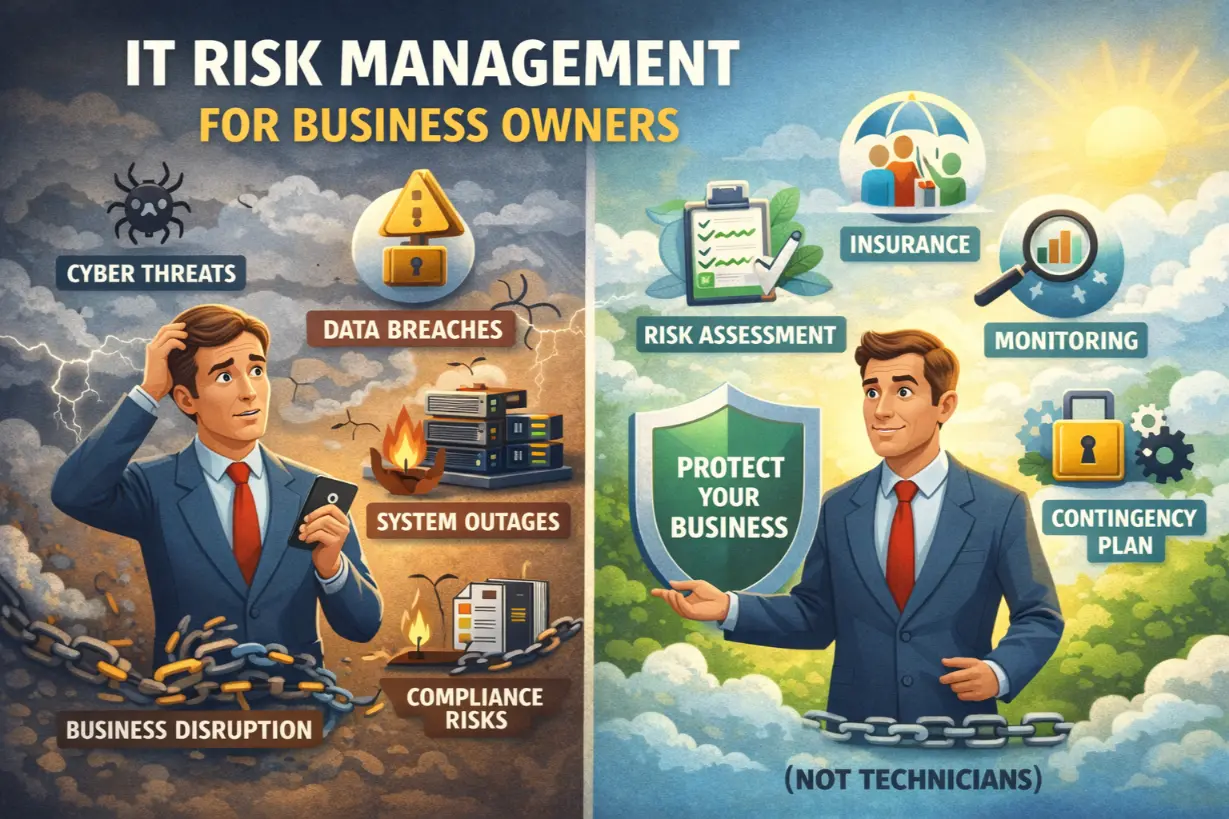
IT risk is not about technology — it’s about business exposure:
- Revenue loss
- Operational disruption
- Legal liability
- Reputation damage
This article reframes IT risk management in plain business terms, helping owners and executives understand what actually matters — without needing to become technologists.
What Is IT Risk (In Business Language)?
IT risk is the chance that technology failures or misuse will harm the business.
That harm usually shows up as:
- Downtime
- Data loss
- Financial fraud
- Compliance violations
- Customer trust erosion
If technology supports the business, then technology failure threatens it.
Why Business Owners Must Own IT Risk
IT teams manage systems.
Leadership owns outcomes.
When something goes wrong:
- Customers blame the company
- Regulators fine the business
- Revenue is lost at the executive level
Delegating execution is smart. Delegating accountability is impossible.
The Four Categories of IT Risk Every Business Faces
1. Operational Risk
Operational risk occurs when systems fail.
Examples:
- Email outages
- Application downtime
- Network failures
Impact:
- Lost productivity
- Missed deadlines
- Revenue disruption
Cyber risk involves:
- Data breaches
- Ransomware
- Fraud
- Account compromise
Impact:
- Financial loss
- Legal exposure
- Reputation damage
3. Compliance & Legal Risk
Regulatory failures lead to:
- Fines
- Lawsuits
- Contract loss
Even unintentional violations carry consequences.
4. Strategic Risk
Poor IT decisions can:
- Slow growth
- Increase costs
- Limit scalability
Technology choices shape business trajectory.
Why IT Risk Is Increasing Every Year
Risk grows because:
- Businesses rely more on technology
- Remote work expands attack surfaces
- Cloud platforms centralize access
- Cybercrime is automated
Doing nothing increases risk automatically.
Common IT Risk Myths Among Business Owners
❌ “We’re too small to be targeted”
❌ “IT has it under control”
❌ “Insurance will cover it”
❌ “We’ve never had a problem before”
These beliefs fail under real-world pressure.
How to Think About IT Risk Like a Business Owner
Ask Business Questions — Not Technical Ones
Instead of:
“Is our firewall updated?”
Ask:
“What happens if this system goes down for a day?”
Focus on Impact, Not Likelihood
Low-probability, high-impact events matter.
Example:
- Ransomware may be unlikely
- But the impact could be catastrophic
Prioritize Critical Systems
Not all systems matter equally.
Identify:
- Revenue systems
- Customer-facing tools
- Compliance-related platforms
Protect what matters most.
The Role of Managed IT in Risk Management
Managed IT translates technical risk into business context.
MSPs:
- Identify vulnerabilities
- Quantify impact
- Implement controls
- Monitor continuously
Risk management becomes operational — not theoretical.
Key IT Risk Controls Businesses Should Expect
Proactive Monitoring
Detect issues before they escalate.
Ensure the business can recover quickly.
Security Controls
Protect access, data, and systems.
Documentation & Policies
Provide consistency and accountability.
Testing & Validation
Assumptions are verified — not trusted.
IT Risk and Cyber Insurance
Insurers now demand:
- MFA
- Endpoint protection
- Backups
- Monitoring
Managed IT helps meet these requirements — and reduce premiums.
How Often Should IT Risk Be Reviewed?
At minimum:
- Annually
- After major changes
- After incidents
Risk evolves as the business evolves.
Signs IT Risk Is Being Ignored
- No documented recovery plans
- No risk assessments
- No monitoring reports
- Leadership surprises during outages
Surprises are symptoms of unmanaged risk.
Risk Management Enables Better Decisions
When leaders understand IT risk:
- Investments are justified
- Tradeoffs are clear
- Growth is safer
Risk clarity leads to confidence.
IT Risk Is About Resilience, Not Fear
The goal isn’t to eliminate risk — that’s impossible.
The goal is to:
- Understand it
- Control it
- Recover from it
Resilient businesses survive disruption.
Own the Risk, Delegate the Tools
Business owners don’t need to know how firewalls work.
They need to know:
- What could go wrong
- What it would cost
- How fast they could recover
Managed IT bridges that gap — giving leaders visibility, control, and peace of mind.
IT risk management isn’t technical.
It’s leadership.
Unsure what technology risks could hurt your business most?
An IT risk assessment can translate technical vulnerabilities into clear business impact.