Digital Transformation Isn’t About Tools — It’s About Execution
Most digital transformation initiatives don’t fail because of bad technology.
They fail because:
- Strategy is unclear
- Execution is fragmented
- Change is unmanaged
- IT isn’t aligned with business goals
Buying new tools is easy. Transforming how a business operates is hard.
This article explains the true role of MSPs in digital transformation, why transformation must be guided — not improvised — and how managed IT services turn technology investments into measurable business outcomes.
What Digital Transformation Really Means
Digital transformation is not:
- Moving email to the cloud
- Buying new software
- Automating a single process
True transformation changes:
- How work gets done
- How decisions are made
- How customers are served
- How risk is managed
Technology is the enabler — not the goal.
Why Digital Transformation Often Fails
Technology-Led Instead of Business-Led
When transformation starts with tools instead of outcomes:
- Adoption suffers
- Complexity increases
- ROI disappears
MSPs help reframe transformation around business impact.
Fragmented Ownership
Without centralized IT leadership:
- Departments adopt tools independently
- Systems don’t integrate
- Data becomes siloed
MSPs provide architectural oversight.
No Change Management
Employees resist change when:
- Training is inadequate
- Processes are unclear
- Expectations aren’t set
Transformation fails without people alignment.
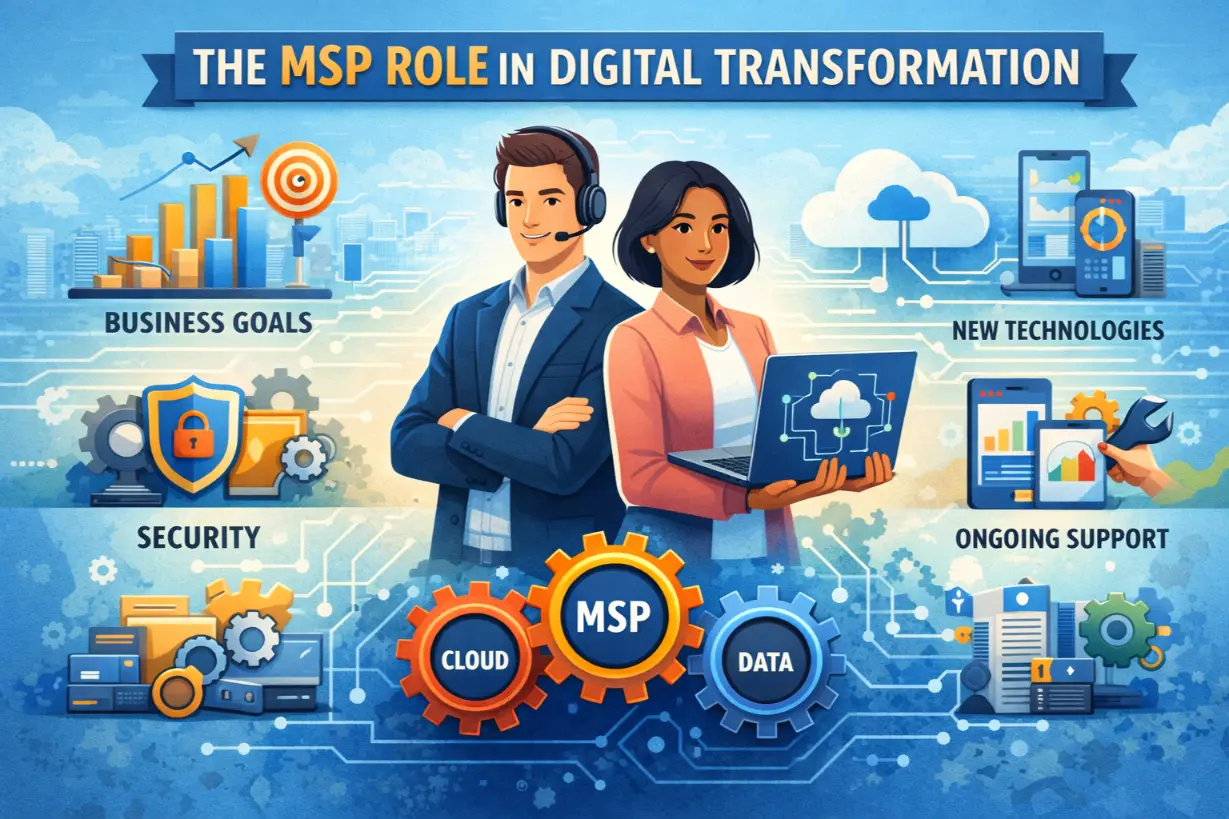
The MSP as a Digital Transformation Partner
Modern MSPs do far more than manage infrastructure.
They act as:
- Technology strategists
- Risk advisors
- Change facilitators
- Execution partners
Transformation requires sustained guidance — not one-time projects.
Phase 1: Digital Readiness Assessment
Before transformation begins, MSPs assess:
- Current systems
- Security posture
- Data maturity
- Workflow efficiency
- Risk exposure
This establishes a realistic starting point.
Phase 2: Defining the Transformation Roadmap
MSPs help leadership define:
- Business objectives
- Technology priorities
- Success metrics
- Timelines and phases
Roadmaps prevent random technology adoption.
Phase 3: Modernizing Core Infrastructure
Transformation often begins with:
- Cloud migration
- Network modernization
- Identity management
- Endpoint standardization
MSPs ensure modernization improves stability — not disrupts it.
Phase 4: Enabling Automation & Efficiency
Automation is a transformation accelerator.
MSPs implement:
- Workflow automation
- IT process automation
- Self-service tools
Efficiency gains free teams for higher-value work.
Phase 5: Data, Analytics & Insight
Digital transformation requires visibility.
MSPs enable:
- Centralized data platforms
- Secure access
- Reporting and analytics
Better data enables better decisions.
Phase 6: Security as a Transformation Foundation
Transformation increases digital exposure.
MSPs embed:
- Zero Trust security
- Continuous monitoring
- Compliance controls
Security enables innovation safely.
The MSP Role in Cloud Transformation
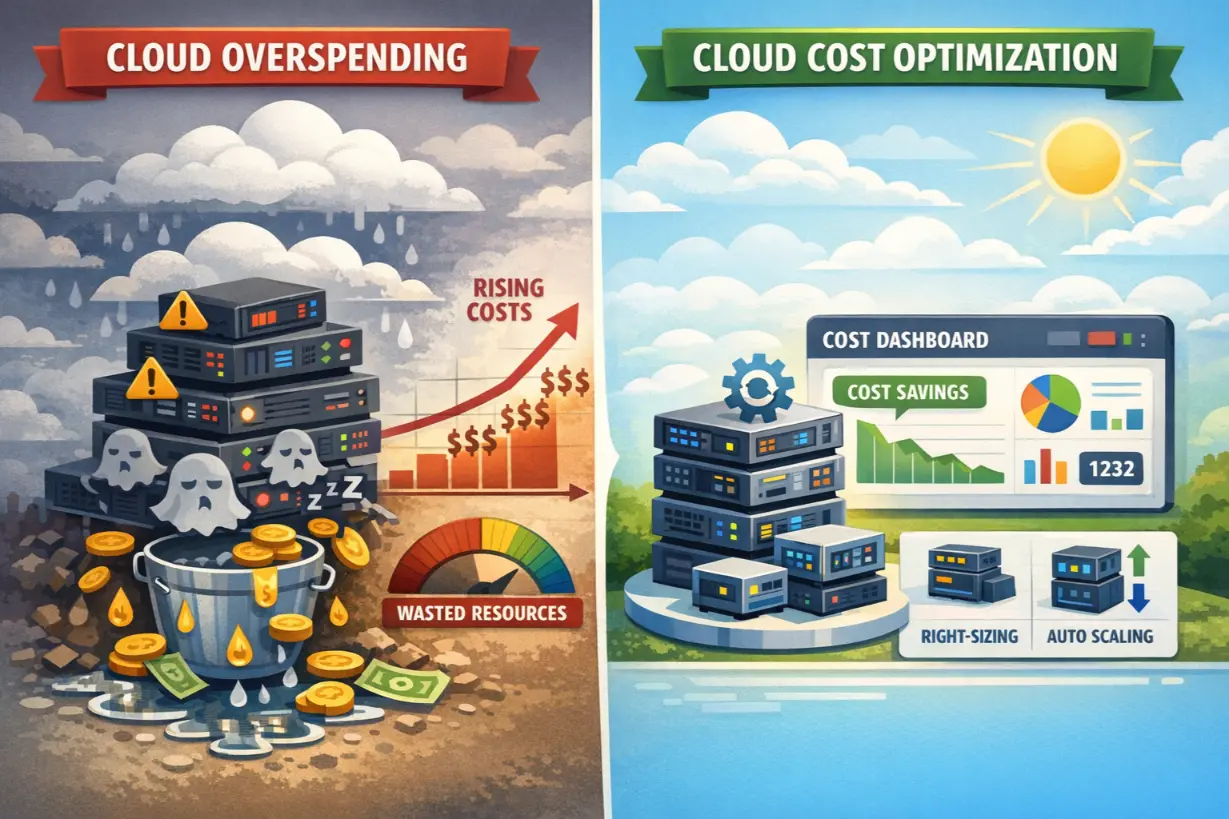
Cloud without governance creates chaos.
MSPs provide:
- Architecture design
- Cost controls
- Performance optimization
- Security enforcement
Cloud becomes strategic — not expensive.
Supporting Culture Change & Adoption
MSPs assist with:
- Training programs
- Adoption strategies
- User experience optimization
Technology succeeds only when people use it well.
Measuring Digital Transformation Success
MSPs track:
- Productivity gains
- Downtime reduction
- Security improvements
- Cost efficiency
- User satisfaction
Transformation must be measurable.
Digital Transformation for SMBs vs Enterprises
SMBs need:
- Simplicity
- Speed
- Cost control
MSPs tailor transformation to scale — not overwhelm.
Common Digital Transformation Mistakes
- Tool sprawl
- No governance
- Ignoring security
- Underestimating change management
MSPs help avoid these traps.
Why MSPs Are Uniquely Positioned for Transformation
MSPs:
- See across industries
- Understand operational risk
- Manage day-to-day IT realities
- Scale best practices
They bridge vision and execution.
Transformation Is Ongoing — Not a Project
Digital transformation never truly ends.
Technology evolves. Threats change. Businesses grow.
MSPs provide continuity and adaptability.
Signs Your Business Needs an MSP-Led Transformation
- Disconnected systems
- Manual processes everywhere
- Poor visibility
- Security concerns
- Slow innovation
These signal transformation opportunity.
Transformation Requires a Guide
Digital transformation isn’t about buying the future.
It’s about building it intentionally.
Managed IT providers ensure:
- Strategy drives technology
- Risk is controlled
- Execution is disciplined
- Value is realized
With the right MSP, digital transformation becomes a competitive advantage — not a costly experiment.
Not sure where your digital transformation should begin?
A digital readiness and transformation assessment can identify the highest-impact opportunities first.